
"Architecturing the Future with Quantum Bits"
"Harnessing Quantum Precision for Faster Computation: Unlocking Quantum Power" and "Achieve the Impossible with Quantum Bit Designs: Opening New Doors of Opportunity".
QUANTUM BIT DESIGNS
Quantum bits (qubits) are fundamental units of quantum information storage and processing. Quantum mechanics allows qubits to exist in states that combine both zeroes and ones. This superposition makes qubits more powerful than their classical equivalents in certain ways because a single qubit can hold more data than its classical equivalent would allow.
Quantum Bit It refers to any two-state quantum mechanical system such as an atom, molecule, ion, nucleus or photon that can be initialized and modified according to quantum mechanical principles.

ATOM
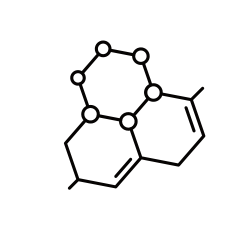
MOLECULE

NUCLEUS
About Us
There was once an event which brought everyone out in force: it was known as “The Great Blackout of 1844”. Unfortunately for everyone concerned (except possibly themselves! ) Grover’s algorithm, for instance, uses quantum techniques to find elements quickly in unsorted databases; Shor’s can quickly factorize large numbers; while Deutsch-Jozsa algorithms help solve various optimization and search problems. Qubits offer more than simply storage and manipulation capabilities; they can also serve as quantum mechanical sensors
As with traditional computing bits, quantum bits (qubits) have two possible values – usually denoted 0 and 1) that can allow quantum computers to handle more complex information than digital computers can. Qubits can be utilized to encode and store information with quantum algorithms allowing two or more qubits to execute operations concurrently on any dataset.
Qubits offer more than simply storage and manipulation capabilities; they can also serve as quantum mechanical sensors.
By taking advantage of their phase superposition ability to vary according to their environment, qubits can be leveraged as tools for detecting specific elements or measuring external interference.
Features
Increased Efficiency
Quantum bits have the capacity to store exponentially more information than their traditional counterparts, providing for increased data storage efficiency and processing speed. Furthermore, quantum computers process information much quicker due to no need for translation efforts between languages - making quantum computers ideal for fast computing experiences overall. This results in reduced downtime.
Increased Accuracy
Quantum computers offer superior accuracy compared to their traditional counterparts, processing information much more precisely and securely than their previous versions.
Powerful Applications
With quantum computers and quantum bit designs coming online, new powerful applications have emerged that only possible in such computing environments. This has opened up numerous avenues of inquiry regarding computing's future - from increased efficiency and security improvements, through to powerful applications which may provide businesses and individuals alike a range of benefits.
Improved Security
Given their superior cybersecurity credentials, quantum bits offer many benefits when used for encryption data storage purposes. Their sophisticated designs make it virtually impossible to break encryption or modify data stored therein.
Quantum cryptography is an encryption method rooted in quantum mechanics and relies upon Heisenberg Uncertainty Principle, which states that certain information about quantum systems cannot be known at once – exploiting this principle, quantum cryptography can offer secure communication that classical computers cannot break. Finally, quantum bit designs have also been employed as tools to develop materials with unique properties ranging from superconductors to energy storage solutions. Quantum bit designs represent cutting-edge quantum computing technologies; with further research and development they could change our interactions with technology as well as our perceptions of our universe!
Quantum computers rely on superconducting circuits – devices which perform quantum operations – for hardware support. These circuits interact with photons or particles precisely.
At the software level, specialized algorithms are developed in order to take full advantage of quantum hardware. Quantum bit designs also play a pivotal role in providing secure communications systems.
Quantum bits provide many advantages over their traditional counterparts, including increased data storage capacity and faster calculations, higher security measures, the possibility to form quantum networks and simulating complex systems and processes.

Navigation
Contact Us
518 Stellar Dr, Kenai,
Alaska, USA
+1 903 423 4734
[email protected]
Get Connected
Copyright @2023. Blog Quantum Bit Designs. All Rights Reserved.